



Exclusive Audience Insights for Land Developers and Home Builders Targeting High-Intent Buyers
The start of a new year does more than reset budgets and calendars. It fundamentally reshapes buyer intent. For land development companies and regional or mid-size home builders, Q1 is one of the most strategically important windows of the year. It is when future homeowners move from passive inspiration to active planning, quietly researching locations, evaluating lifestyle tradeoffs, and aligning financial decisions with long-term residential goals.
At Uniquely Digital, we see this shift in real time through our access to exclusive, intent-based audience intelligence. One of the most powerful audiences we track is People Visiting Real Estate & Moving Websites, a segment representing more than 16.2 million highly targetable adults actively signaling relocation, land purchase, or home-building intent.
This is not generic interest data. It is behavior-driven intent, and it provides a significant competitive advantage for developers and builders who want to drive qualified traffic, sales event attendance, and measurable return on ad spend (ROAS).
Today’s digital browsers become spring and summer buyers, but only if you understand who they are, what drives them, and how and WHEN to engage them across the fragmented digital landscape.
In this article, we break down:
- How Q1 buyer behavior differs from the rest of the year
- What motivates people actively visiting real estate and moving websites
- How psychology and lifestyle shape creative and messaging performance
- Where these audiences engage across paid social, programmatic display, and streaming TV
- How to turn intent into real sales outcomes
Why Q1 Buyer Intent Is Different for Real Estate, Land, and Homebuilding
Unlike seasonal retail demand, real estate and land decisions are future-oriented. Buyers are rarely acting on impulse. Instead, they are:
- Evaluating long-term lifestyle changes
- Coordinating decisions with spouses or family members
- Assessing affordability, location, and timing
- Planning months, or even years, ahead
In Q1, these behaviors intensify.
New Year momentum creates a natural inflection point where “someday” becomes “this year.” Financial planning resets. Career changes become more concrete. Families reassess space, location, and quality of life.
People visiting real estate and moving websites during this period are not casual browsers. They are high-intent planners, and their behavior patterns reveal exactly how to reach them, influence them, and convert them.
Audience Overview: People Visiting Real Estate & Moving Websites
This audience is defined by observable digital behavior, not inferred interest. They are actively:
- Visiting real estate listing platforms
- Researching relocation and moving services
- Consuming home-focused and property-related media
- Evaluating future residential decisions
From a media and marketing standpoint, this audience represents a high-value demand pool for:
- Acreage land sales
- Residential development projects
- Build-on-your-lot programs
- Master-planned or lifestyle-driven communities
Did you know: Uniquely Digital has the ability to activate these audiences consistently across digital channels while remaining privacy-safe and scalable.
Understanding the High-Intent Real Estate Audience
This isn’t your average digital audience. People actively visiting real estate and moving websites demonstrate specific behavioral patterns that separate them from casual internet users. They’re 55% female with a mean age of 48, predominantly married (62%), and notably, 56% don’t have children under 18, suggesting empty nesters downsizing or couples ready to invest in their forever home.
While 28% have some college education, this audience demonstrates sophisticated purchasing behavior that transcends traditional demographic targeting. They’re collaborative decision-makers who value research, comparison, and professional guidance.

A slight female majority, signaling the importance of inclusive, collaborative messaging.

A strong married household skew, signaling the importance of inclusive, collaborative messaging

A median age near 50, reflecting established buyers rather than first-time renters

Solid middle-to-upper household incomes, with long-term financial planning in mind

A majority without children under 18, often indicating lifestyle-driven moves rather than school-district-driven urgency
Strategic Implications for Developers and Builders
These demographics suggest:
- Messaging should focus on confidence, foresight, and smart decision-making
- Creative should emphasize space, flexibility, and long-term value, not short-term promotions
- Sales funnels should support education and validation, not pressure tactics
This is an audience that responds to clarity, transparency, and credibility.
The Home Improvement Mindset: Beyond the Property Search
Here’s where it gets interesting for land developers and builders: this audience isn’t just looking at properties. They’re actively envisioning what they’ll do with them. The data reveals a powerful psychological driver: these prospects are already mentally invested in home improvement and design projects.
Major retailers like Home Depot and Lowe’s feature prominently in their shopping habits, indicating they’re not passive dreamers but active planners. They’re pricing materials, researching design trends, and consuming content from shows like “House Hunters” and “My Lottery Dream Home.” This behavioral pattern suggests they’re further along the buyer journey than you might think.
For land developers, this insight is transformative. Your messaging shouldn’t just showcase acreage, it should speak to the vision of what can be built there. For homebuilders, customization and upgrade options become critical selling points, not secondary features.
What Truly Motivates This Audience
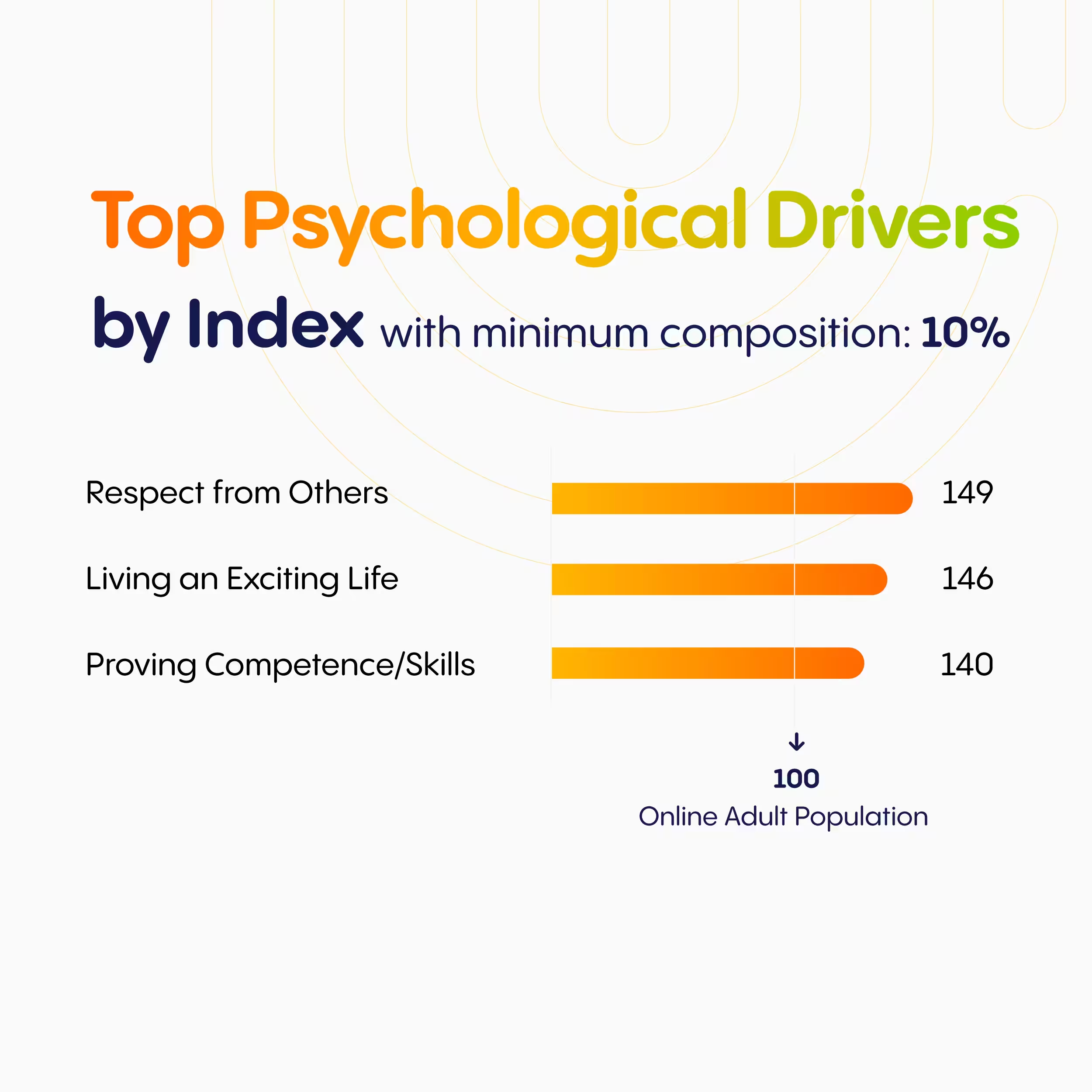
Top Psychological Drivers of Land and Home Builder Prospects
The psychological profile of this audience reveals three dominant drivers that should inform every aspect of your marketing strategy:
- Respect From Others (Index: 149) – This audience significantly over-indexes on seeking respect and recognition. They’re making a statement with their property purchase, whether it’s acreage that demonstrates success or a custom home that reflects their achievements.
- Living an Exciting Life (Index: 146) – At nearly 50% above the general population, this drive suggests they view real estate decisions as lifestyle transformations, not mere transactions.
- Proving Competence/Skills (Index: 140) – These buyers want to demonstrate their savvy decision-making and ability to create something valuable.
From a marketing perspective, this means:
- Creative should affirm buyers as smart planners, not impulse purchasers
- Messaging should reinforce confidence in the decision process
- Testimonials and storytelling should validate the buyer’s judgment
Land and home purchases are deeply personal. Effective advertising speaks to identity, not just features.
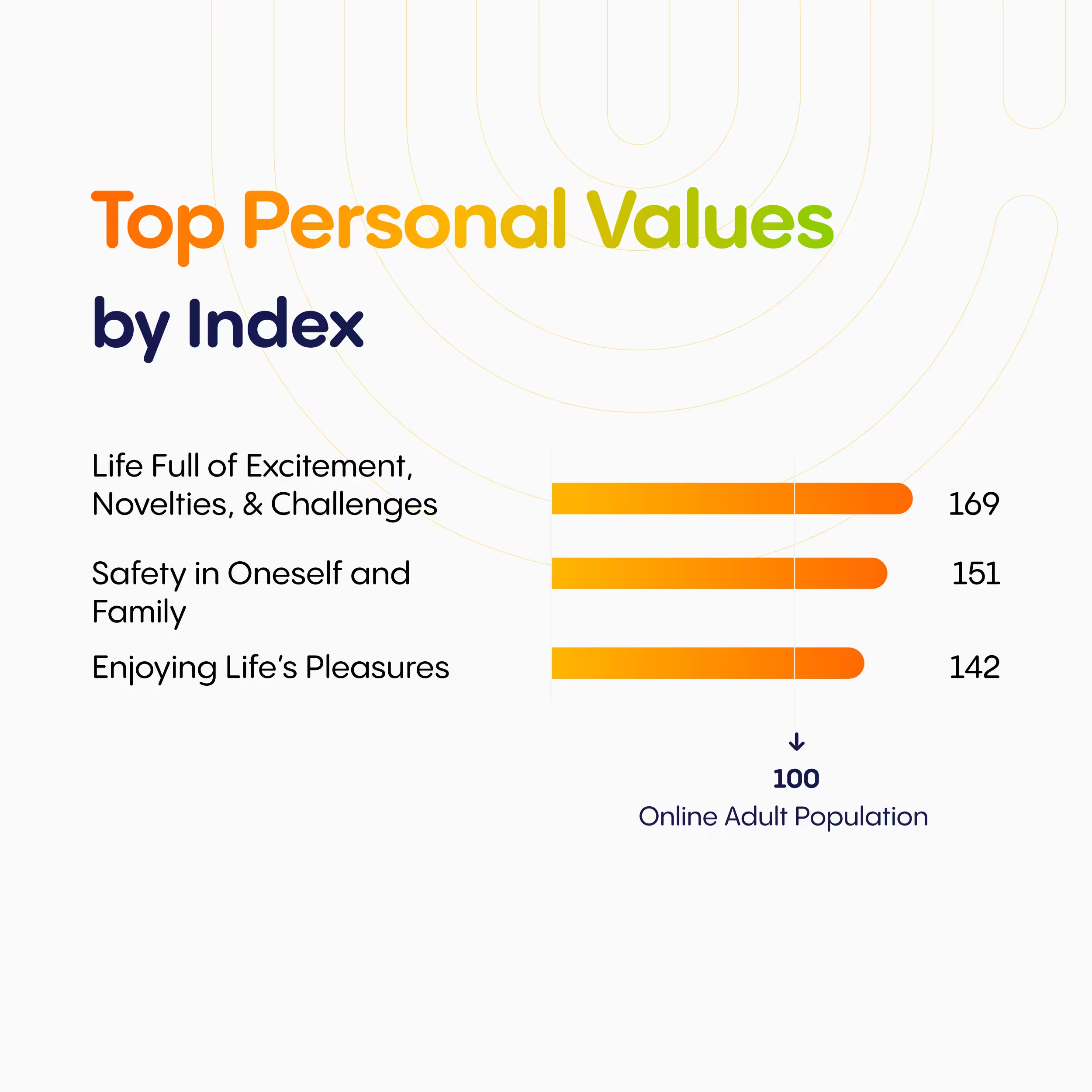
Top Personal Values
Similarly, their top personal values reveal they seek excitement, novelty, and challenge (Index: 169), alongside safety for themselves and family (Index: 151). This seemingly contradictory combination actually makes perfect sense. They want the adventure of building or customizing their dream property within the security of a smart real estate investment.
Land ownership and homebuilding represent:
- Freedom to design life on their own terms
- A tangible symbol of progress and success
- A foundation for future experiences, not just shelter
These values reveal an important truth.
This audience is not choosing between stability and aspiration. They want both.
Travel Enthusiasts Who Make Their Home Their Destination
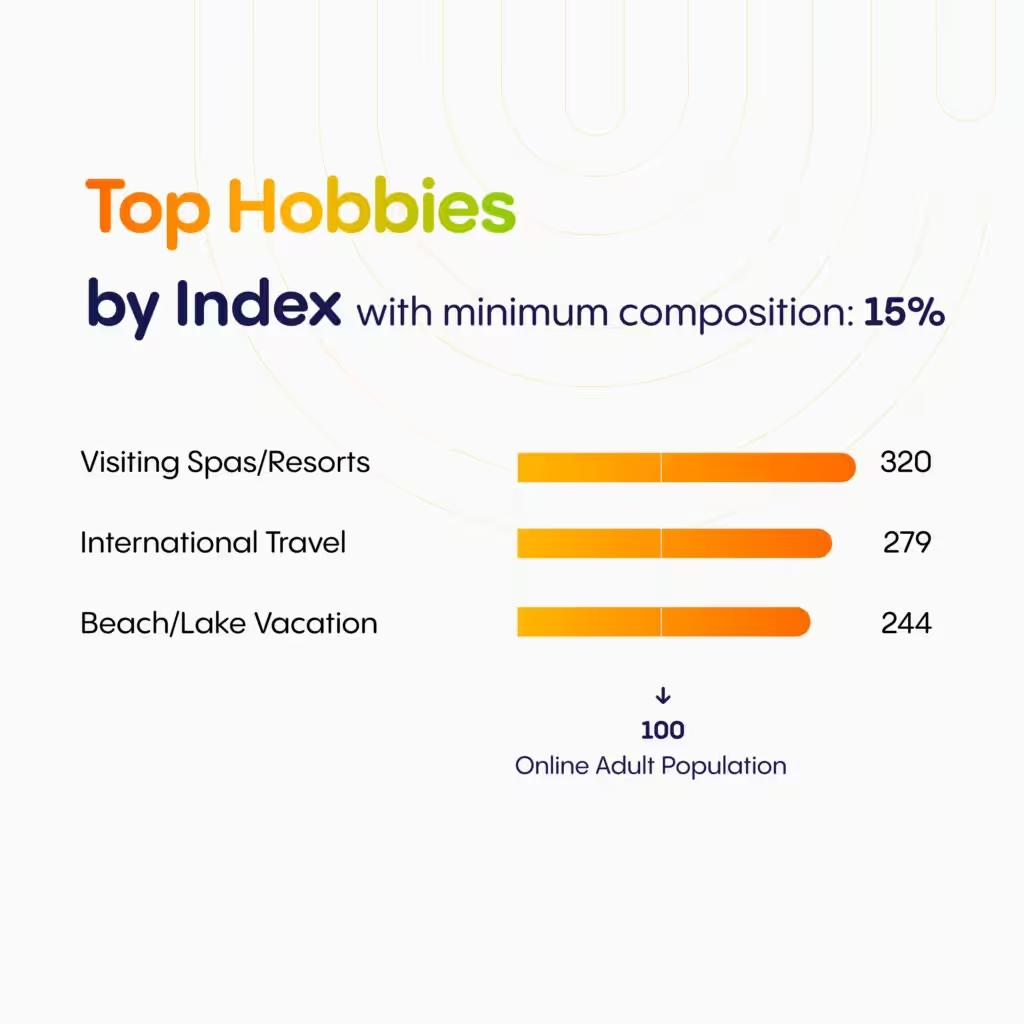
One of the most intriguing patterns in this audience profile is their intense engagement with travel planning and experiences. They’re actively purchasing luggage, planning trips, and showing strong interest in international travel (Index: 279) and spa/resort visits (Index: 320).
These interests align closely with the emotional drivers behind land and home purchases:
- Desire for space and escape
- Preference for quality of life over density
- Long-term lifestyle upgrades rather than temporary fixes
Why does this matter for homebuilders and land developers? Because this audience views their home as a destination, a retreat from the world, not just a place to sleep. They’re looking for properties that offer resort-like amenities, outdoor living spaces, and the kind of escape they typically seek through travel.
Creative Recommendations
Your creative messaging should emphasize lifestyle amenities: outdoor kitchens, pool designs, proximity to natural features, and the concept of “staycation-worthy” properties. These buyers want every day to feel like vacation.
High-performing creative for this audience often includes:
- Open landscapes and aerial views
- Outdoor living spaces and natural surroundings
- Imagery that implies calm, control, and freedom
- Messaging that connects property ownership to lifestyle, not transactions
Health-Conscious, Value-Driven Shoppers
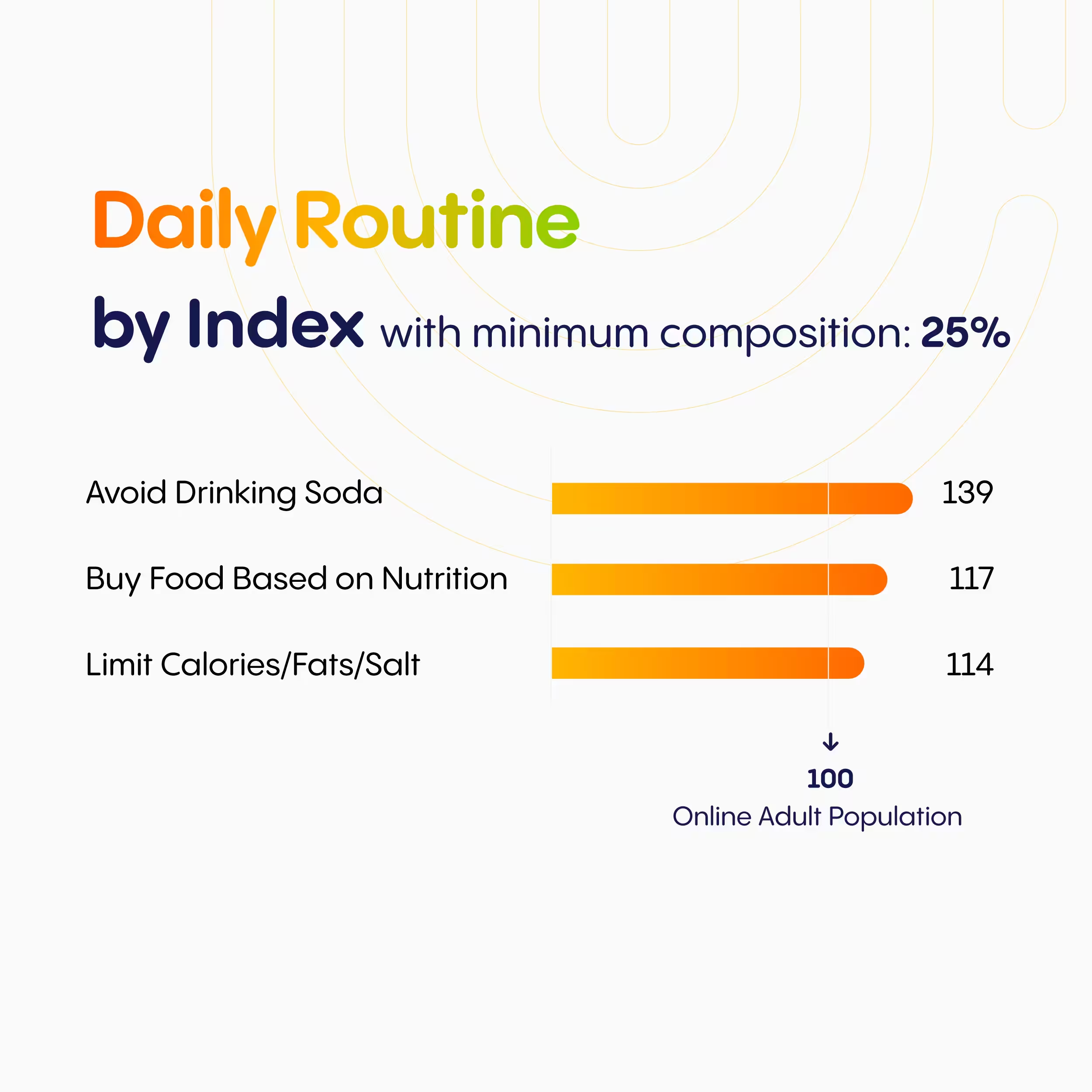
The daily routine data reveals another critical insight: this audience actively avoids drinking soda (Index: 139), buys food based on nutrition (Index: 117), and limits calories/fats/salt (Index: 114). They prefer bulk shopping at wholesale retailers like Costco for health and beauty products.
This health-conscious mindset extends to their real estate preferences. They’re looking for properties that support active, healthy lifestyles, think walking trails, bike paths, proximity to outdoor recreation, and spaces for home gyms or yoga studios. They value quality and longevity in their purchases, which means they’ll respond to messaging around build quality, energy efficiency, and long-term value rather than just price-point marketing.
Marketing Implications
This audience responds well to:
- Educational content and explainer formats
- Clear next steps rather than vague calls to action
- Lead-generation tools that offer value, such as:
- Planning guides
- Community comparisons
- Event previews
- Build-process walkthroughs
Trust is earned through information, not hype. They research before acting. They compare options. They want to feel informed.
Here’s a quick flip through all the consumer buying motivations listed:
Digital Media Engagement: Where to Reach Them
Understanding where this audience spends their digital time is essential for efficient media buying. The data reveals specific platform preferences that should guide your Q1 media strategy.
| Media Channel | Strategy | Tactic |
|---|---|---|
| Paid Social Media | – Introducing lifestyle narratives – Delivering testimonials and social proof – Driving awareness for sales events and community launches | Sequential messaging performs especially well, allowing buyers to move from inspiration to validation over time. |
| Programmatic Display | – Precision targeting during active research phases -Reinforcement of brand presence across relevant content environments – Retargeting based on real engagement behavior | This channel is particularly effective for staying top-of-mind during long decision cycles. |
| Streaming TV (CTV/OTT) | – Emotional storytelling at scale – Brand authority and legitimacy – Incremental lift across lower-funnel channels | When paired with proper measurement, streaming TV becomes a performance driver |
Streaming TV Opportunities
This audience maintains active subscriptions across multiple streaming platforms, providing multiple touchpoints for Connected TV (CTV) and Over-The-Top (OTT) advertising. Their device usage spans smart TVs, streaming sticks, and gaming consoles, indicating they’re comfortable with technology and expect seamless digital experiences.
For land developers and homebuilders, streaming TV advertising offers the perfect medium to showcase property beauty, lifestyle benefits, and brand storytelling. Unlike traditional TV, you can target this specific audience across their favorite content, ensuring your message reaches active prospects rather than passive viewers.
Social Media Strategy
The social media behavior of this audience requires a nuanced approach. While they engage with major platforms, they do so “sparingly but purposefully.” They use LinkedIn for professional networking and independent review sites for purchasing decisions—indicating they’re researchers who value credibility over virality.
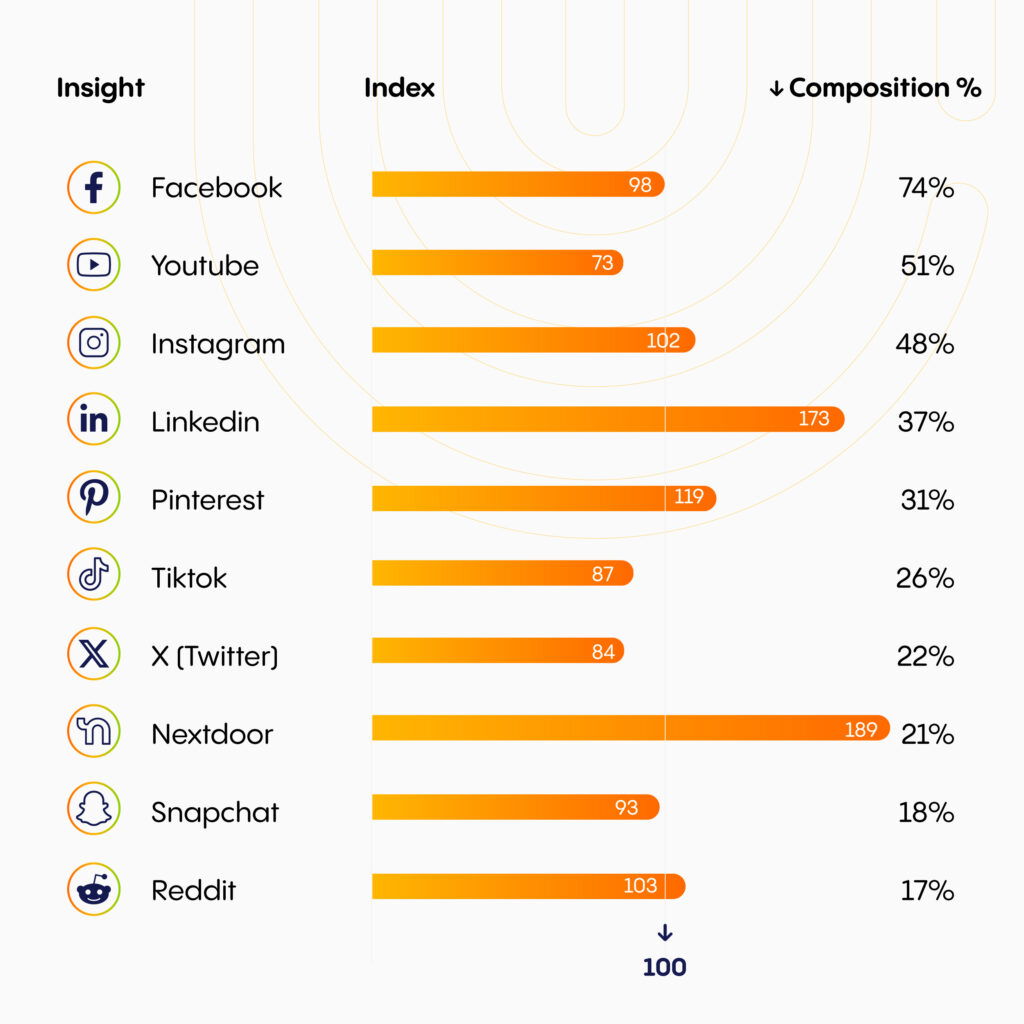
Your social approach should pair a disciplined organic presence with a paid strategy that ensures scale, precision, and consistency as buyer intent develops. YouTube and Facebook function as the primary paid reach engines, allowing you to extend beyond your owned audience and consistently reach people actively researching real estate and moving. Video-led paid formats such as land and property overviews, lifestyle-driven community highlights, and educational explainers help introduce your offering early and remain visible as consideration builds.
That paid reach becomes significantly more effective when layered with high-index platforms like Pinterest, Nextdoor, and LinkedIn, where this audience shows stronger-than-average engagement. Pinterest supports aspirational planning through visual storytelling, Nextdoor adds localized trust and relevance, and LinkedIn reinforces credibility with professional decision-makers evaluating long-term investments.
Together, organic content establishes a credible foundation, while paid media ensures the right stories reach the right high-intent buyers, driving qualified traffic, sales event attendance, and measurable ROI.
App Categories and Mobile Behavior
The top app categories this audience engages with provide clues about their mobile behavior and content preferences. They’re using apps for practical purposes, shopping, home improvement research, travel planning, and financial management.
Mobile advertising should focus on utility and convenience: virtual property tours, mortgage calculators, design idea galleries, and easy-to-complete lead forms that don’t disrupt their browsing experience.
E-Commerce Preferences and Digital Convenience
This audience demonstrates a strong preference for online shopping across various categories, from pet supplies (Chewy) to kid products (Amazon). They value convenience and are comfortable making significant purchases online, a behavior that extends to their real estate research.
For Q1 campaigns, this means your digital presence must be comprehensive and conversion-optimized. Virtual tours, detailed property information, online inquiry forms, and even virtual sales consultations should be standard offerings, not premium features. This audience expects to complete significant portions of the buying journey digitally before ever scheduling an in-person visit.
Skepticism and Trust: The Critical Conversion Factor
Perhaps the most important insight for marketing strategy is this audience’s demonstrated skepticism toward various industries. The data shows they doubt whether companies act in consumers’ best interests, particularly in food, beverage, technology, and clothing sectors.
This skepticism is likely extended to real estate and homebuilding. These industries are sometimes not known for transparency. Breaking through this barrier requires authentic, evidence-based marketing:
- Social proof: Feature real homeowner testimonials and video interviews
- Transparency: Clearly communicate pricing, timelines, and what’s included
- Third-party validation: Showcase awards, certifications, and independent reviews
- Educational content: Demonstrate expertise without hard selling
- Collaborative approach: Emphasize partnership and guided decision-making
Collaborative Decision-Making: Marketing to the Household
The data reveals that this audience makes decisions collaboratively on travel arrangements, alcohol consumption, and by extension, major purchases like real estate. This has profound implications for your marketing approach.
Your messaging, creative assets, and sales process should acknowledge multiple decision-makers. Show diverse perspectives in your content, create materials that can be easily shared between partners, and design sales events that welcome and engage entire families, not just the primary contact.
Sports Enthusiasm: An Unexpected Targeting Opportunity
The audience’s keen interest in sports events, particularly the Winter Olympics and live sporting events, presents unique targeting opportunities that competitors may overlook. Advertising during sports programming, sponsoring sports-related content, or even hosting sales events around major sporting occasions can capture this audience when they’re relaxed, engaged, and receptive to new ideas.
Building Your Q1 Targeting Strategy
With this rich audience intelligence, here’s how land developers and homebuilders should structure their Q1 digital media approach:
Programmatic Display Campaigns
Deploy programmatic display advertising that targets this specific audience as they browse real estate sites, home improvement content, and travel planning platforms. Use dynamic creative optimization to serve different messages based on which sites they’re visiting, emphasizing lifestyle for travel enthusiasts, customization for DIY planners, and investment value for financial researchers.
Paid Social Precision
Leverage the platform preferences identified in the data. Create LinkedIn campaigns targeting professionals in relevant demographics, Facebook campaigns reaching married couples aged 45-60, and Instagram campaigns showcasing visual property beauty and lifestyle aspirations. Use lookalike audiences based on your existing customers to expand reach while maintaining quality.
Streaming TV Domination
With this audience’s active streaming subscriptions and OTT device usage, allocate significant budget to Connected TV advertising. Create compelling 15-30 second spots that showcase property beauty, location advantages, and lifestyle benefits. Geo-target to your service areas and layer audience targeting to reach confirmed real estate researchers.
Search and Intent Capture
While this analysis focuses on awareness and consideration-stage tactics, don’t neglect intent-based search campaigns. When this audience searches for “acreage for sale [your region]” or “new homes [your city],” your paid search campaigns should capture that high-intent traffic with compelling ad copy and landing pages optimized for conversion.
Creative Implications: Messaging That Resonates
The audience insights should fundamentally shape your creative development:
Visual Style: Feature aspirational but attainable lifestyle imagery. Show families enjoying outdoor spaces, couples entertaining friends, and empty nesters in stylish, low-maintenance environments. Avoid overly staged or unrealistic scenarios and remember, this audience is skeptical and values authenticity.
Messaging Themes:
- “Your Next Adventure Starts at Home”
- “Built for How You Live Today, Designed for Your Dreams Tomorrow”
- “Quality You Can See, Value You Can Trust”
- “More Than Property. It’s Your Lifestyle Investment”
Calls-to-Action: Move beyond generic “Learn More” buttons. Try “Explore Your Options,” “Start Your Property Journey,” “See What’s Possible,” or “Get Your Custom Site Analysis.”
Measuring Success: ROAS That Matters
For this high-value audience, traditional metrics like click-through rates tell only part of the story. Your measurement framework should include:
- Qualified Lead Volume: Not just form fills, but prospects who meet your qualification criteria
- Sales Event Attendance: If driving to in-person events, track registrations and show-up rates
- Lead-to-Sale Conversion: The ultimate measure captures what percentage of digital leads become buyers?
- Customer Acquisition Cost: Total marketing spend divided by new customers acquired
- Lifetime Value: For builders with multiple communities, track repeat customers and referrals
Because this is an audience with a mean income approaching $100K and demonstrated investment mindset, your ROAS targets should reflect the higher lifetime value of acquired customers.
The Q1 Imperative: Act Now
Here’s the reality: this audience is researching now for decisions they’ll make in spring and summer. Every day you wait is a day your competitors might be building relationships with your future customers. The combination of high intent, substantial buying power, and clear media consumption patterns creates a perfect targeting opportunity, but only if you act strategically and quickly.
The new year has brought new intent, but that intent won’t wait for generic marketing approaches or delayed campaign launches. This audience demands sophisticated, data-driven marketing that speaks to their specific needs, values, and media habits.
Ready to Turn Audience Intelligence Into Sales Results?
Uniquely Digital doesn’t just provide data, we help you activate it. Our team specializes in translating audience insights like these into comprehensive digital media strategies that deliver measurable ROAS for land developers and homebuilders.
The true value of this audience lies in activation and measurement.
At Uniquely Digital, we don’t stop at audience insights. We:
- Build custom, privacy-safe audience segments
- Activate them across paid social, programmatic display, and streaming TV
- Drive traffic to sales events, community showcases, and lead-gen experiences
- Measure impact through matchback reporting that ties media exposure to real outcomes
This approach allows land developers and home builders to:
- Reduce wasted ad spend
- Focus on buyers who are already planning
- Prove marketing performance in terms leadership understands – sales and ROI
We’d like to show you custom audience intelligence specific to your markets, competitors, and growth opportunities. Whether you’re launching a new community, driving traffic to sales events, or building a pipeline for the spring selling season, we can help you reach the right audience with the right message on the right platforms.
Get Your Custom Audience Demo →
If you want to see:
- How large your high-intent buyer audience truly is
- Where they live, how they think, and how they engage
- How to turn intent into real sales and measurable ROAS
Q1 demand shapes the entire year.
The buyers researching land and homes today will become the contracts, closings, and communities of tomorrow. The brands that win are the ones that recognize intent early and act on it intelligently.
Let’s start 2026 with a data-driven approach that turns high-intent prospects into qualified leads and satisfied homeowners. Contact us today to see how audience intelligence can transform your marketing performance this year.
Check out our land and home builder case studies!
About the Data: This analysis is based on engaged audience data from 16.2 million targetable individuals actively visiting real estate and moving websites, indexed against the online adult population baseline. Index scores above 100 indicate over-representation compared to the general population.