



Contents
Navigating Paid Advertising in a Shifting Digital World
What we’ll cover…
- A Temporary Reprieve: Why Google’s latest decision on third-party cookies isn’t a reason to pause your strategy.
- The Real Drivers of Change: Understanding the consumer sentiment and market forces that still make a strategic pivot necessary.
- How to Build a Resilient Paid Advertising Strategy:
- Build your own first-party data through meaningful interactions.
- Expand your personalization horizons.
- Use ‘cookieless’ identifiers like Universal IDs.
- Work with the right paid media specialist.
- Win in Any Advertising World with Uniquely Digital.
What is a Third-Party Cookie?
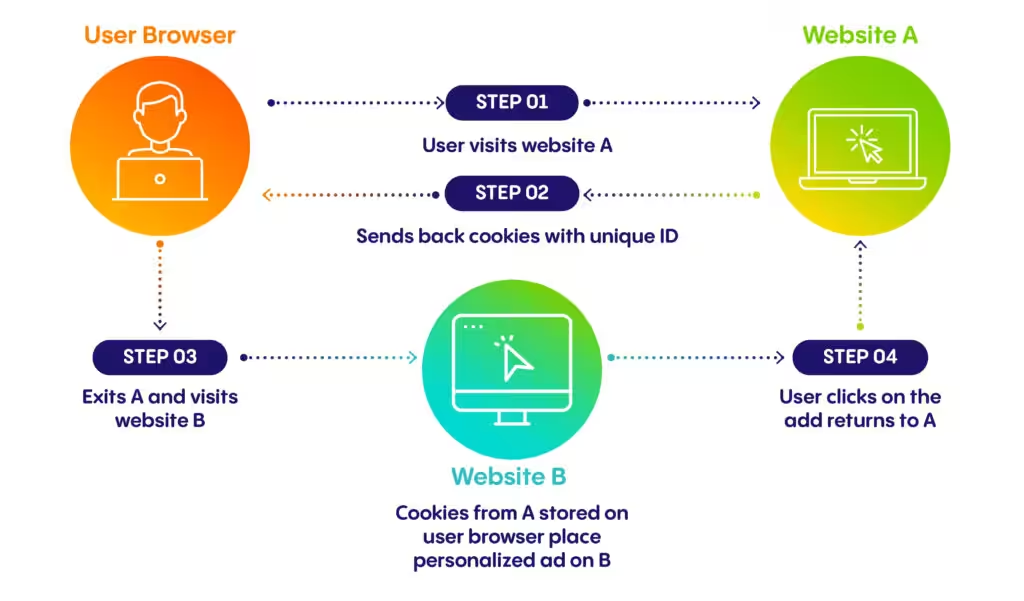
A third-party cookie (3PC) is a tracker placed on a website by someone other than the owner (a third party) to collect data about site visitors for that third party. These crumbs of information were the foundation for uncovering consumer insights for many years, but the landscape is in constant motion. We will explore all you need to know about third-party cookies and the growing legislative and consumer pressures around privacy that continue to shape the future of advertising.
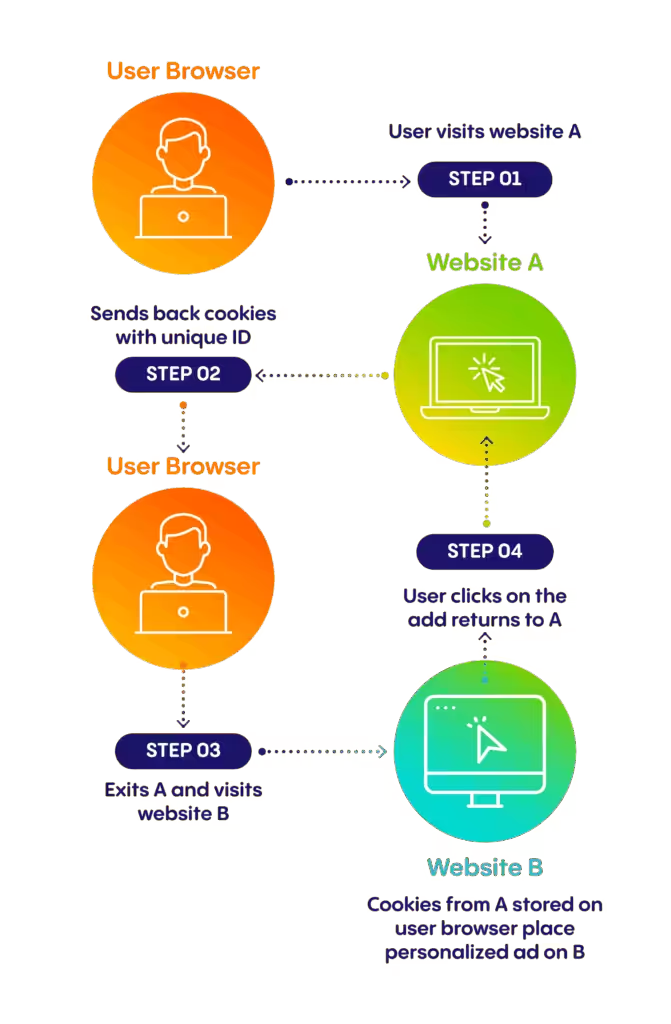
Check out the below flow chart of the consumer shopping experience and how third-party cookies work below:
Google Hits the Brakes, But the Destination is the Same
For years, the advertising industry has been bracing for the “death of the third-party cookie,” with Google planning a full phase-out in Chrome. However, in a pivot in summer 2025, Google announced it is not moving forward with its user-choice prompt for deprecating third-party cookies at this time, as reported by AdExchanger.
For many brands and marketers, this news may feel like a last-minute pardon. But it’s crucial to see this for what it is: a delay, not a cancellation of the inevitable shift towards a more privacy-centric web.
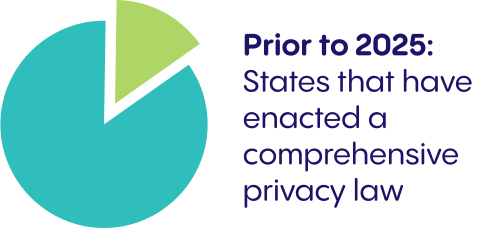
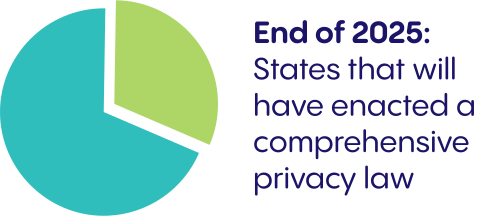
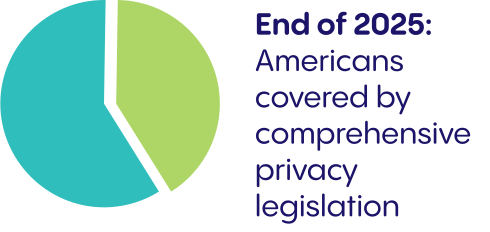
While Chrome’s timeline has changed, other major browsers like Safari and Firefox have been blocking third-party cookies for years. The real forces driving this change, consumer demand for privacy and global data regulations, haven’t gone anywhere. As seen in the chart below, several US states are enacting their own consumer privacy laws with the most well-known being the California Consumer Privacy Act. This extra time isn’t a hall pass to return to old methods; it’s a golden opportunity for savvy advertisers to build a more resilient, future-proof strategy.
Check out this table of privacy laws passed by US states since 2018:
Enactment and effective dates of comprehensive US state privacy laws
| STATE PRIVACY LAW | DATE OF PASSAGE | DATE OF ENFORCEMENT |
| California Consumer Privacy Act | 28 June 2018 | 1 Jan. 2020 |
| California Privacy Rights Act | 3 Nov. 2020 | 9 Feb. 2024 |
| Virginia Consumer Data Protection Act | 2 March 2021 | 1 Jan. 2023 |
| Colorado Privacy Act | 7 July 2021 | 1 July 2023 |
| Connecticut Data Privacy Act | 10 May 2022 | 1 July 2023 |
| Utah Consumer Privacy Act | 24 March 2022 | 31 Dec. 2023 |
| Oregon Consumer Privacy Act | 22 June 2023 | 1 July 2024 |
| Texas Data Privacy and Security Act | 16 June 2023 | 1 July 2024 |
| Montana Consumer Data Protection Act | 19 May 2023 | 1 Oct. 2024 |
| Iowa Consumer Data Protection Act | 29 March 2023 | 1 Jan. 2025 |
| Tennessee Information Protection Act | 11 May 2023 | 1 July 2025 |
| Indiana Consumer Data Protection Act | 1 May 2023 | 1 Jan. 2026 |
| Delaware Personal Data Privacy Act | 11 Sept. 2023 | 1 Jan. 2025 |
| New Jersey Senate Bill 332 | 16 Jan. 2024 | 15 Jan. 2025 |
| New Hampshire Senate Bill 255 | 6 March 2024 | 1 Jan. 2025 |
| Kentucky Consumer Data Protection Act | 4 April 2024 | 1 Jan. 2026 |
| Nebraska Data Privacy Act | 17 April 2024 | 1 Jan. 2025 |
| Maryland Online Data Privacy Act | 9 May 2024 | 1 Oct. 2025 |
| Minnesota Consumer Data Privacy Act | 24 May 2024 | 31 July 2025 |
| Rhode Island Data Transparency and Privacy Protection Act | 25 June 2024 | 1 Jan. 2026 |
The Underlying Cracks in the Foundation
The initial push to deprecate cookies didn’t create new problems; it exposed existing vulnerabilities in ad strategies that are overly reliant on a single type of data. Without a plan to move beyond 3PCs, advertisers face significant challenges that impact the bottom line, regardless of Google’s timeline.
These challenges include:
- Mass targeting and overspending on advertising due to a shallow understanding of consumer data.
- Less personalized and therefore less effective ads due to limited tracking opportunities.
- Challenges with A/B testing for continual campaign optimization.
- Roadblocks with frequency capping, leading to ad fatigue and overexposure.
- Reduced ability to measure return on ad spend (ROAS) across channels.
- Difficulties allocating campaign budgets effectively.
The data shows that consumers are the primary drivers of this change. A reliance on 3PCs is a reliance on a tool that users are actively rejecting.
Did you know? 69% of advertisers feel that the shift away from third-party cookies will impact their business more than stringent data privacy laws like GDPR and CCPA.
How Do Consumers Feel?
User sentiment is clear: privacy is a major concern.
- 163 Million U.S. adults (69%) are concerned with their digital privacy.
- 76 Million U.S. adults (1 in 3) state they would never accept cookies if given the choice.
Source: Uniquely Digital Audience Analytics, August 2025
This data proves that building a strategy on trust and direct relationships isn’t just a good idea for the future—it’s what your customers want right now.
How to Build a Resilient Paid Advertising Strategy for Today and Tomorrow
While many ad professionals may be breathing a sigh of relief, the smartest ones are using this extended time to get ahead of the pack. The following alternatives to 3PC-heavy strategies aren’t just workarounds; they are superior methods for targeting, optimization, and performance tracking.
1. Build Your Own First-Party Data Through Meaningful Interactions
Regardless of what happens with third-party cookies, first-party data has always been the most valuable asset. This is data you own and collect directly from your audience. To build your own robust data set, set up your website and customer touchpoints to collect the insights you need. These details include:
- Customer emails
- Customer phone numbers
- Consumer shopping histories
- On-page Browse behaviors
Developing interactive quizzes, surveys, and value-driven content based on your audience’s specific needs and pain points is a powerful way to earn this data. Incentivizing your customers to provide information with personalized deals or exclusive content will also strengthen your data foundation. These insights will help you target the right consumers across the right channels while developing messaging that speaks to them on a direct, personal level.
FYI: Uniquely Digital analyzes our clients’ customer base to uncover exclusive audience insights and develop valuable segmentation. We dive deep to define ideal target audiences and find others just like them – the kind most likely to become loyal super fans.
2. Expand Your Personalization Horizons
You don’t need 3PCs to develop personalized digital experiences. With a robust first-party data strategy, you’re no longer dependent on external trackers to create meaningful, dynamic digital ads that deliver tailored content to specific audience segments in real-time.
Leveraging this data means you can reach your consumers with the messaging, visuals, and offers that inspire them to invest.
FYI: We leveraged our deep-dive audience targeting expertise to help our dental clients speak to multilingual audience segments, boosting leads and brand awareness by 60%. Read the full success story here.
Idea: Implement post-purchase surveys to capture more first-party data on customer satisfaction, demographics, and future needs.
| Survey Tool | Pros | Cons |
| Survey Monkey | Easy to use interface- Strong analytics and reporting; Widely recognized | Limited customization in free plan; Pricing can be steep for advanced features |
| Typeform | Visually engaging, interactive forms; Great UX- Conditional logic | Can be expensive; Not ideal for very long surveys |
| Google Forms | Free and easy to use; Integrates with Google Sheets; Simple UI | Basic design and branding options; Lacks advanced analytics |
| Microsoft Forms | Free with Microsoft 365- Integrates with Excel; Simple to deploy | Limited design flexibility; Fewer question types than competitors |
| Qualtrics | Enterprise-level analytics; Advanced logic & segmentation; Great for large organizations | High cost; Steeper learning curve |
3. Use ‘Cookieless’ Identifiers like Universal IDs
Universal IDs and other identity solutions are gaining momentum as privacy-compliant alternatives that bridge the gap between platforms. These solutions ‘hash’ (anonymize) personal data like email addresses (with user consent) into a unique ID.
When a user logs into a website with their email, that email can be ‘hashed’ into a ‘Universal ID.’ If other sites or platforms in the ecosystem recognize that same hashed ID, they can build a profile and serve targeted ads without the need for third-party cookies.
Adopting a mix of these cookieless identifiers now is a proactive step to diversify your targeting capabilities:
- Unified ID 2.0 (UID2) by The Trade Desk
- ID5
- Proprietary Publisher IDs and First-Party Data Solutions
How Universal IDs Work

Step 1. User interacts with a website or app, and their identity data is collected

Step 2. The collected data is transformed into a unique, hashed or encrypted identifier to protect user privacy

Step 3. The Universal ID is stored and used across platforms to maintain consistent recognition of users

Step 4. Ad tech platforms integrate the Universal ID for precise targeting, measurement & personalization
4. Work with the Right Paid Media Specialist
The solutions we’ve covered will elevate your paid ads, but they require expertise, time, and dedicated effort. Instead of going it alone, partner with a paid advertising specialist that has access to a wealth of exclusive data insights and a strategic approach that already transcends the limitations of 3PCs.
Data-Proof Your Advertising with Uniquely Digital
Did you know? We connect 1 billion data points to 230 million real people to ensure you get more from the media you buy.
Your ad budget will thrive with Uniquely Digital. Our 4 pillar, audience-first approach and access to unrivaled data insights ensure you’re prepared for whatever comes next in the world of digital advertising. We build resilient strategies based on our proven four-pillar approach.
- Razor-Sharp Audience Targeting: The foundation of any great strategy is knowing who you’re talking to. We analyze your current data and harness real-world insights to define your ideal audiences—prospects that will become loyal super fans. Then, we connect these real people to the right media channels where they’re most likely to engage.
- Tailored Media Planning and Digital Strategy: We launch ad campaigns on the channels where your target audience truly spends their time. We develop winning strategies tailored to your needs, focusing on the platforms that really work.
- Digital-First Creatives: Our expert digital-first design team will create campaign-specific assets that command attention, offer value, and drive a real response.
- Continual Measurement and Growth: We don’t throw your cash at clicks. We continually measure ad performance to ensure your campaigns meet or exceed your goals. We keep our finger firmly on the pulse, so we’re always ready to optimize and improve.
The result? No wasted budgets. Consistent commercial growth. Consistently high ROI.
Are you ready to build a resilient ad strategy that drives consistent ROI, no matter what happens with cookies?
Book a Consultation