


Contents
Learn how turnkey acquisition email campaigns use verified consumer lists, performance creative, and match-back reporting to drive sales.
For years, retail, automotive, and consumer brands have leaned heavily on email marketing. However, most focus their efforts exclusively on their own internal databases, sending newsletters and promotions to customers who have already purchased from them. While retention is vital, relying solely on your existing list limits your growth to the size of your current audience.
To break through this plateau, leading brands are shifting their focus toward acquisition (or conquest) email. Unlike traditional email marketing, acquisition email targets prospects beyond your database. It is a proactive strategy designed to put your brand in front of new, high-intent consumers who haven’t interacted with you before, effectively turning “strangers” into “customers.”
By leveraging turnkey acquisition campaigns, businesses are seeing that they can drive massive incremental sales. And when email campaigns are built this way, it stops being a “nurture tactic” and starts becoming what most teams actually need: a revenue machine that consistently drives new customer demand.
This is how leading retailers and auto dealers turned emails into measurable growth, using the same framework Uniquely Digital deploys for turnkey acquisition email campaigns.
The Shift: From Email Blasts to Revenue Strategy
Most businesses approach email backwards. They assume email success is all about sending more messages more often, then wonder why performance is inconsistent.
The truth is simpler: most email programs were never designed to generate predictable revenue in the first place. They’re built for retention, brand awareness, or “staying in touch” but not for acquisition and conversion.
High-performing brands flipped the model. Instead of treating email like a communications tool, they started treating it like a performance channel, complete with strong audience strategy, conversion-first creative, and measurable outcomes.
Just as important, they recognized something deeper about email itself: email creates one of the few moments in digital marketing where a brand has a consumer’s undivided attention.
When someone opens an email, they’ve made an active choice. They’re not passively scrolling. They’re not multitasking between dozens of competing stimuli. They’re reviewing information in a focused environment built for reading, considering, and deciding.
That moment of attention is powerful.
It gives brands the space to:
- Tell a complete story
- Present a clear offer
- Build urgency and relevance
- Drive a specific next action
This is why email has consistently remained one of the highest-converting digital channels. Not because it’s new, but because it aligns with how people naturally evaluate and act on information.
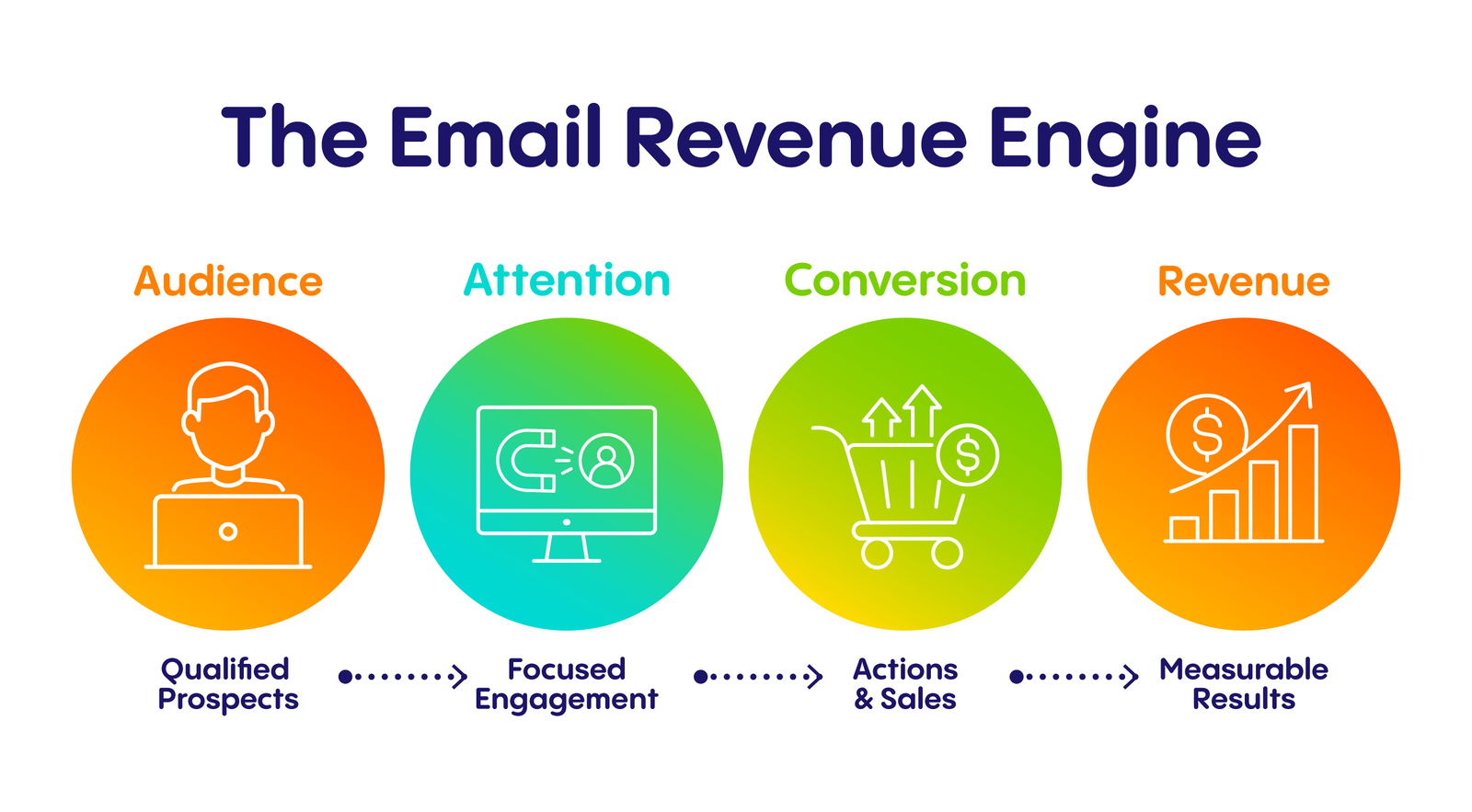
But attention alone isn’t enough. High-performing brands combine that attention with strategy.
Here’s what that shift looks like in practice:
- Start with high-quality acquisition audiences
Reach consumers who are actively in-market, not just past customers. - Design creative built for conversion
Clear offers, strong calls-to-action, and messaging aligned to buyer intent. - Prove sales impact with match-back reporting
Connect email exposure directly to revenue, both online and in-store.
That’s the formula that turns email into a machine instead of a gamble.
Because when you combine qualified audiences, focused attention, and measurable outcomes, email stops being just another marketing activity.
It becomes a predictable revenue channel.
What High-Performing Acquisition Email Campaigns Have in Common
Across industries, we’ve seen that the most successful acquisition email campaigns don’t win because they “send more.”
They win because every part of the campaign is engineered around buyer intent and revenue outcomes. That means the audience strategy is specific, the creative is built to convert, and the reporting proves what actually happened after the send.
So, to turn acquisition email data into a revenue engine, you need more than a catchy subject line. The most successful campaigns rely on three critical components:
- Better Lists: Success starts with verified, real people 1. By targeting intent-based consumer audiences rather than generic lists, brands ensure their message reaches those most likely to buy.
- Better Creative: Performance-driven creative is designed specifically to convert, moving a prospect from “just looking” to a confirmed sale.
- Better ROI Tracking: With Premier Match-back Reports, the guesswork is gone. Brands can see exactly who engaged, clicked, and ultimately converted2.
Let Dig into these deeper:
1. Better Data: Why Quality Consumer Data Determines ROI
Verified, Intent-Based Audiences
A lot of brands think getting an email “list” is the easy part, i.e. why not just get emails and send the offer?
But the audience data used to generate targeted emails is the foundation of the entire performance equation.
The biggest reason acquisition email fails isn’t subject lines. It’s the audience. If you’re targeting low-quality emails or people who aren’t in-market, even the best creative can’t save it.
Revenue-driving campaigns start by ensuring the people receiving the message are real, reachable, and actively aligned to what the brand sells.
Better email data includes:
- Verified consumer data built to reach real people
- Behavioral and intent-based targeting tied to buying activity
- Demographic overlays aligned to purchase readiness and price point
Instead of renting random attention, brands invested in reaching high-intent consumers who were already shopping.
2. Better Creative: How Conversion-driven Emails Turn Prospects Into Buyers
Built to Convert, Not Just Look Good
Email creative can’t just be “on brand.” It must be conversion-driven.
The brands getting true revenue lift from acquisition email don’t treat email design like a newsletter. They treat it like a landing page and sales message combined: fast, clear, promotional, and action-oriented.
Successful campaigns focus on what a prospect needs to see quickly:
- Why this matters
- Why now
- What to do next
What Conversion-Driven Email Creative Includes:
- Clear promotional hooks (holiday sales, limited-time events, urgency-based offers)
- Strong CTAs tied to store visits, inventory, pricing, or appointment intent
- Mobile-first layouts optimized for fast scanning and quick action
The result is email that doesn’t just get opened, it drives buyers to purchase.
3. Better ROI: How Match-Back Reporting Connects Email to Real Purchases
Proving What Actually Sold
The biggest barrier to scaling email acquisition isn’t performance. It’s proof.
Most marketing teams can’t confidently say:
“Email generated $X in revenue from new customers.”
They can show opens, clicks, and traffic, but the CFO doesn’t approve more spend based on that.
That’s why the most successful brands anchor their strategy around match-back reporting. It replaces uncertainty with clarity by showing exactly how email translates into real outcomes.
With match-back reporting, brands can see:
- Who received the email (audience-level transparency)
- Who engaged or clicked (response behavior)
- Who converted into a sale (real revenue attribution)
This is what allows marketing leaders to stop defending spend and start scaling what works.
Email Industry Spotlights: Real-World Results
1. Retail: The Power of the Holiday Surge
Multi-location furniture stores have mastered the art of the “Event Sale” by reaching out to new prospects3. By deploying targeted emails to conquest lists during key shopping windows, these brands have seen exponential growth:
- March Mania: A 200,000-email deployment resulted in 304 sales. This campaign achieved a massive 136X ROI.
- Labor Day Sale: By scaling to 400,000 emails, one retailer secured 269 sales. This resulted in a 72X ROI.
- Holiday Consistency: From President’s Day (34X ROI) to the 4th of July (48X ROI), consistent conquest execution ensures every major holiday becomes a significant revenue event.
For a deeper dive into these retail strategies, you can view our detailed Furniture Customer Email Case Study.
2. Automotive: Driving New and Used Car Sales
Dealerships often struggle to find new buyers outside of their local service zip codes. Acquisition email solves this by tapping into fresh, high-intent audiences:
- Honda Dealerships: Focused campaigns of 100,000 emails delivered up to a 52X ROI. These campaigns successfully drove both new car sales (29) and used car sales (12).
- Toyota & Kia: These brands consistently see ROIs ranging from 21X to 30X by reaching verified consumers ready to get behind the wheel.
- Spanish Language Outreach: Targeting specific demographics works. One Auto Group campaign achieved a 55X ROI by deploying 100,000 emails to Spanish-speaking prospects. This campaign generated 39 new car sales and 14 used car sales.
Summary of Success: Acquisition Email ROI at a Glance
| Brand / Event | Emails Deployed | Sales Generated | ROI Performance |
| March Mania Retail | 200,000 | 304 Sales | 136X ROI |
| Labor Day Retail | 400,000 | 269 Sales | 72X ROI |
| Spanish Auto Group | 100,000 | 53 Total Sales | 55X ROI |
| Honda Dealership | 100,000 | 41 Total Sales | 52X ROI |
Because match-back reporting connected campaign exposure to actual transactions, these results weren’t guesswork, they were provable.
How to Build Your Email Marketing Revenue Machine
You don’t need a massive internal marketing department to see these results.
The Uniquely Digital Approach
Zero Lift Execution: A fully managed service handles everything from audience deployment to reporting, allowing business owners to focus on operations while the campaign drives new customers.
The “Zero Lift” approach means you can deploy sophisticated, match-back-verified campaigns that work in the background. By moving beyond your own database and embracing acquisition email, you can tap into a constant stream of new customers.
Key Takeaways: Build an Email Revenue Engine (Not a Newsletter)
The brands winning with email today aren’t guessing. They’re deploying fully-managed acquisition email campaigns built on verified consumer data, conversion-first creative, and match-back reporting that proves what sold.
If your goal is new customers and measurable revenue, email is still one of the strongest channels available, when it’s built to perform.
Acquisition Email Marketing FAQs:
What is acquisition email marketing?
Acquisition email marketing is a strategy that helps you reach new customers beyond your current database by deploying campaigns to a targeted, high-quality consumer audience. Unlike traditional email marketing, which is usually focused on nurturing existing customers, acquisition email is designed to drive measurable actions like store visits, lead submissions, appointments, or purchases. At Uniquely Digital, we run acquisition email as a performance channel: we pair intent-based consumer data with conversion-driven creative, then use match-back reporting to prove exactly which recipients turned into real sales.
How do you source high-quality consumer email lists?
High-quality consumer email lists come from using verified audience data, not generic list buying. The goal is to reach real people who are actually in-market, not random inboxes.
Our approach focuses on:
- Verified, real consumer identities (to improve deliverability and performance)
- Intent-based audience targeting aligned to shopping behavior and buying signals
- Geo-targeting and demographic filters so the message matches the right household profile
- Data quality controls to reduce waste, improve engagement, and drive higher conversion rates
In short: we don’t just “get emails.” We build acquisition audiences designed to generate revenue.
What is match-back reporting in email marketing?
Match-back reporting is one of the most important pieces of acquisition email because it shows what happened after the send, not just opens and clicks.
Instead of stopping at engagement metrics, match-back reporting connects your campaign to outcomes like:
- who received the email
- who engaged and clicked
- who converted into a real sale (or lead, appointment, etc.)
This is how brands stop guessing and start knowing what revenue email actually produced. It’s also what gives decision-makers the confidence to scale spend, because performance is tied to measurable business results.
How do I measure ROI from acquisition email campaigns?
To measure ROI from acquisition email campaigns, you need a clear link between campaign cost and revenue generated from the audience that received the email.
At Uniquely Digital, we measure ROI by combining:
Campaign delivery and audience reporting (who was reached)
Engagement metrics (clicks, traffic, actions)
Match-back conversion reporting (sales tied to recipients)
The most common ROI formula looks like this:
ROI = Revenue Attributed to Campaign ÷ Campaign Cost
The key difference is attribution: when you can tie revenue back to exposed recipients, ROI becomes a business metric—not a marketing assumption.
How many emails should I deploy per campaign?
The “right” number of emails depends on your goals, your market size, and how broad your audience needs to be. Most acquisition campaigns perform best when you have enough scale to generate conversions, but still stay targeted enough to avoid wasted spend.
In practice, many brands deploy campaigns in ranges like:
- 100,000 emails for more targeted tests or smaller market footprints
- 200,000 emails for full campaigns with strong reach and conversion potential
- 400,000+ emails for larger promotions, big sales events, or multi-location coverage
If you’re not sure where to start, we typically recommend beginning with a campaign size that gives you clean performance signal, and then scaling based on match-back results and ROI.
Does acquisition email work for furniture stores?
Yes, acquisition email is one of the strongest channels for furniture retail, especially around promotions and seasonal sales events.
Furniture buyers often have longer consideration windows and high-ticket baskets, which means reaching them with the right offer at the right time can drive significant revenue. When paired with intent-based audiences and performance creative, acquisition email becomes a reliable way to:
- drive store traffic during big sale windows
- capture new buyers beyond the current customer file
- generate measurable sales lift with match-back reporting
The brands that win don’t rely on newsletters, they run acquisition email like a promotional demand engine.
Does acquisition email work for auto dealerships?
Absolutely, acquisition email works extremely well for auto dealerships, including both new and used vehicle sales, when the targeting and measurement are done correctly.
Dealership marketing often struggles with wasted spend because broad targeting can reach people who aren’t actively shopping. Acquisition email solves that by focusing on:
- reaching verified consumers in-market
- promoting inventory-driven or urgency-based offers
- proving results with match-back reporting tied to real sales outcomes
For dealership groups especially, acquisition email can become a scalable layer alongside paid media and is designed to deliver measurable performance, not just awareness.
Is conquest or acquisition email marketing legal?
Yes. Acquisition email marketing is legal when it complies with the CAN-SPAM Act, which regulates how commercial email is sent in the United States.
The law does not require prior business relationships. Instead, it requires that emails:
- Clearly identify the sender
- Use accurate, non-misleading subject lines
- Include a physical mailing address
- Provide a clear and working unsubscribe option
- Honor all opt-out requests promptly
Reputable data providers and service platforms are built around these requirements. They maintain suppression lists, manage opt-outs automatically, and deploy campaigns through compliant infrastructure. In most cases, the advertiser never takes possession of the email addresses, which helps protect consumer privacy.
When executed through compliant partners, acquisition email is a fully legal, established, and widely used channel for reaching new customers.
Acquisition Email Marketing Tools and Resources:
Download the Smart Due Diligence Questions to Ask Vendors Checklist

