
Furniture Advertising Guide: Connect Digital Ads to Showroom Sales
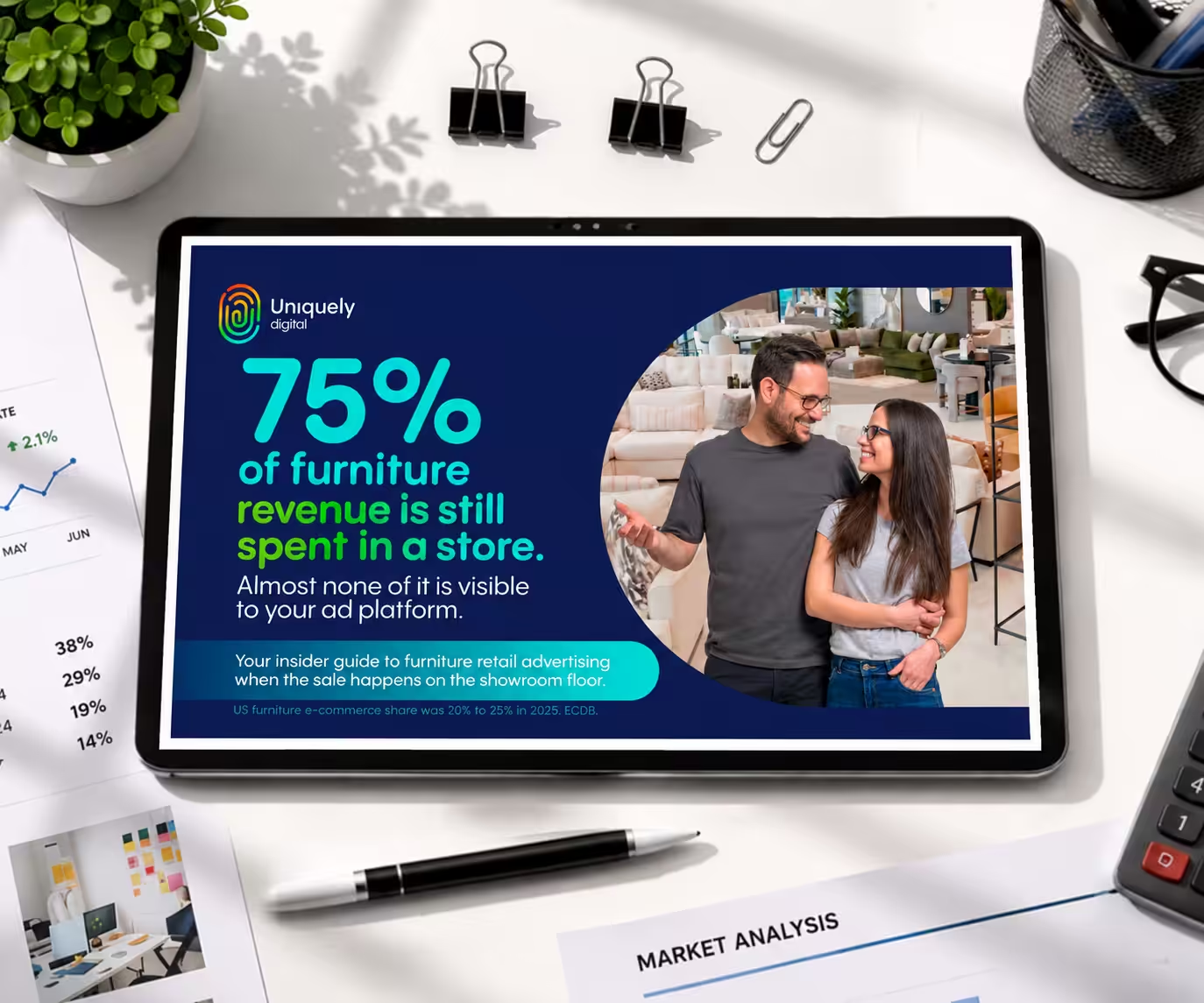
75% of furniture sales happen in store. Does your ad reporting connect the sale?
When your reporting tracks only online purchases, it misses the showroom sales your advertising helped generate. This free guide shows furniture retailers how to close that gap.
- Reach shoppers with declared furniture purchase intent.
- Give customers a reason to visit beyond the next discount.
- Connect ad reporting with sales recorded at the register.

Written by Brandon Buras
Chief Innovation & Strategy Officer, 15+ years in performance media
Get the free guide
The core problem
Why furniture advertising needs more than an online ROAS report
A furniture purchase can begin with an ad, continue through product research and end with a conversation on your showroom floor. When reporting captures only online purchases, it can leave out the outcome your business depends on.
Optimizing for clicks creates another gap. A low-cost website visit does not tell you whether someone is choosing a sectional, comparing financing or preparing to visit a store. Retailers that already upload offline conversions are ahead; the guide helps everyone else get there and helps both groups send better signals.
Where the sale happens, and where online-only reporting stops
-
Online · tracked
Ad engagement
A shopper sees inspiration, a product or an offer.
-
Online · tracked
Product research
They browse products, financing or store locations.
-
In store · often untracked
Showroom purchase
The sale closes on the floor and is recorded at the register.
Offline uploads + POS matchback close the loop
Earlier online signals guide delivery while shoppers decide. Matched sales data flows back to your ad platform and verifies results once they buy, so campaigns learn from real purchases.
Case study · Texas furniture retailer
8.5X More Attributed Purchases
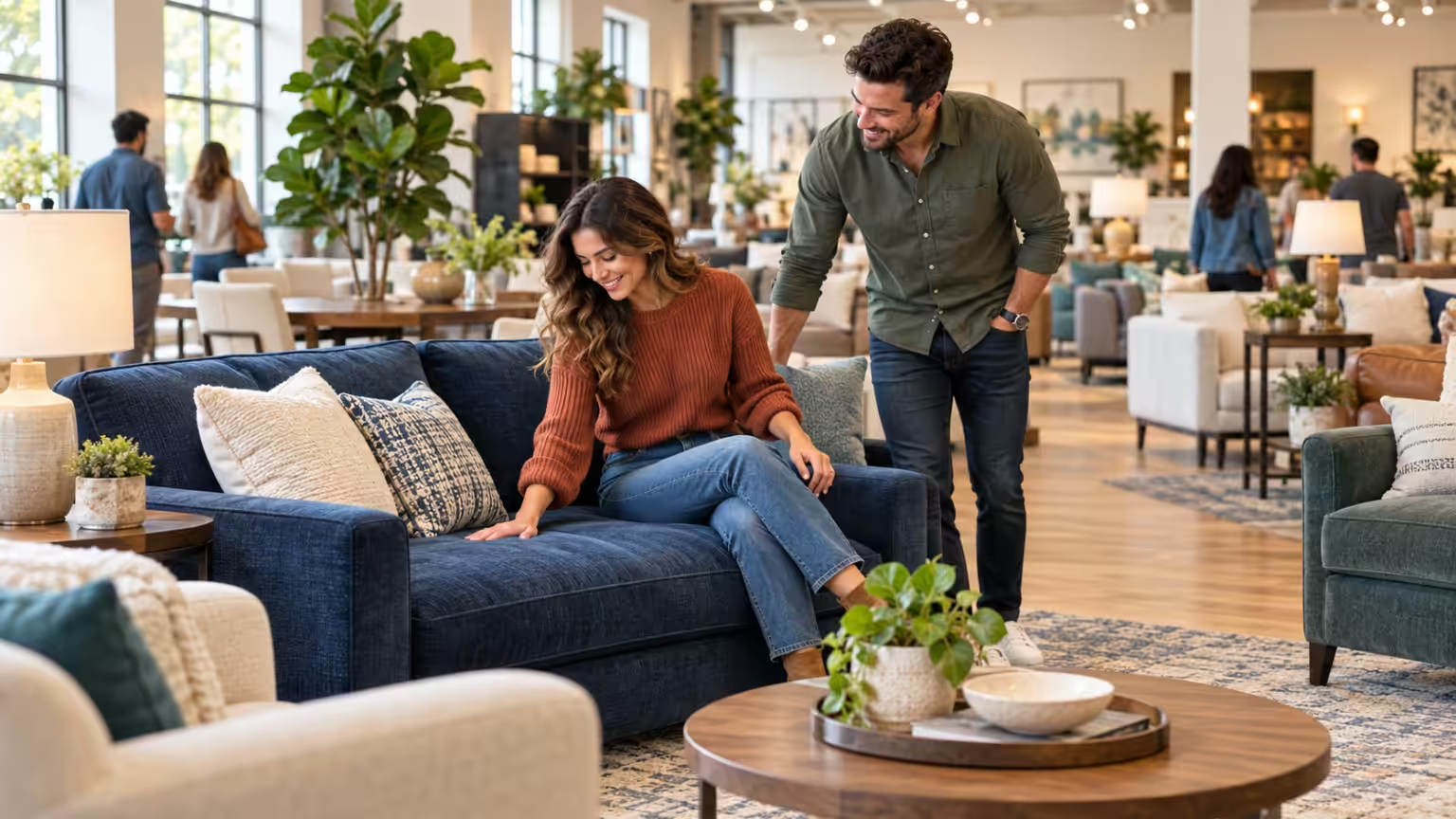
90% of this retailer’s sales happened in store. Ad sets that combined a custom high-intent Meta signal with matched showroom sales were compared with other ad sets in the same Meta campaign.
Ad sets compared within the same Meta campaign over six months. Attributed purchases include matched in-store transactions.
Inside the guide
Four critical steps toward a stronger furniture advertising strategy
-
Step 01 · Creative
Create ads that earn the showroom visit
Move from room inspiration to product details, customer proof, a relevant offer and a clear next step.
-
Step 02 · Data
Improve the conversion data you already collect
Server-side tracking, first-party customer information and event deduplication that improve the signals reaching your ad platforms.
-
Step 03 · Signals
Give Meta a more useful definition of purchase intent
Evaluate product engagement, financing applications and store-locator use, plus declared-intent audiences and store trade areas.
-
Step 04 · Channel mix
Plan media around your buyers’ attention
How search, social, video and streaming play different roles in the path to purchase, and where to test beyond your current mix.
Bonus: six-question account audit
Can your furniture advertising answer these questions?
The guide includes a six-question account audit to help your team identify where targeting, signals and reporting need a closer look.
- 01What action are your campaigns optimized to generate?
- 02Have in-store purchases been matched back to your advertising?
- 03Can you evaluate return across both online and in-store sales?
- +3Three more questions inside the guide
Furniture advertising questions, answered
How can furniture retailers connect digital advertising to in-store sales?
Match point-of-sale transactions to the people your ads reached. Retailers export sales from their POS or CRM with customer details such as email, phone, name and ZIP code, then send them to the ad platform as offline conversions, either by scheduled upload or through an API connection. The platform matches the hashed customer details to its users and reports which purchases followed ad exposure.
What is an offline conversion, and why does it matter for furniture stores?
An offline conversion is a sale or other outcome that happens outside your website, such as a purchase recorded at the register. When most furniture revenue closes in the showroom, offline conversions are how your ad platform learns which campaigns, audiences and creative actually produce buyers, not just website visitors.
What should furniture campaigns optimize for if most sales happen in store?
Optimize toward online actions that signal buying intent rather than clicks alone. Useful signals include viewing several product pages, starting a financing application, using the store locator, requesting directions or booking an appointment. These signals guide delivery while shoppers decide; matched sales data then verifies which campaigns drove purchases.
Why can click-based optimization mislead furniture advertisers?
Ad platforms deliver the outcome you ask for. A campaign optimized for link clicks or low-cost landing page views finds people who click cheaply, who are not necessarily people preparing to buy a sofa or a mattress. A better-defined conversion event helps the platform find shoppers who behave like buyers.
What customer data do I need to match in-store sales to my ads?
Each sale needs a transaction date and value plus at least one customer identifier, such as email or phone number. Adding name, city and ZIP code generally improves match rates, which is why capturing an email or phone number at checkout matters. Customer details are hashed before matching, and your privacy policy should explain how customer information is used for advertising.
How do you reach shoppers who are actually in the market for furniture?
Combine several audience sources: audiences built on declared furniture and mattress purchase intent, category-specific interests, new movers, your own customer data and the trade areas around your stores. The guide explains how each one fits into a furniture advertising strategy.
Who is the Furniture Advertising Guide for, and is it free?
Yes, it is free. The guide is written for furniture retail owners, marketing directors and teams responsible for showroom traffic, paid media and sales measurement, especially retailers whose customers research online and buy in store. Get instant access, or see how Uniquely Digital supports furniture retail marketing.
See the sales your ads already drive.
Practical guidance for furniture retail owners and marketing teams. Free, instant access.
Get the free guide