
An Event Marketing Case Study
Here’s how a single-channel Meta strategy grew ticket revenue 302% year over year and delivered a 16.6x return for one of Texas’s biggest Mardi Gras celebrations, all on a flat budget.
Seasonal events live and die by a short selling window. When the calendar is fixed and the competition is loud, the brands that win are the ones that sell early, sell to the right people, and measure every dollar in real time.
Mardi Gras is one of the most crowded moments on the events calendar, and Galveston Island hosts one of the largest celebrations in the country. Parades, balcony parties, live entertainment, a 5K run, and weeks of festivities draw visitors from across the region. But a packed calendar cuts both ways. Standing out and turning attention into booked tickets before the event even starts, is the hard part.
That’s the challenge our client brought us. Challenge accepted.
Meet the client
Mardi Gras Galveston is a multi-week island celebration built around parades, historic balcony experiences, a 5K run, and a full slate of festive entertainment. It’s a destination event, drawing crowds from Houston and the wider Gulf Coast region every season.
The challenge: Sell the presale and win net-new visitors
Events face a specific, stubborn problem: presale. Getting people to commit and pay weeks before the gates open is the hardest revenue to earn, and it was the client’s top priority heading into the season.
On top of that, this is a well-established event with a strong regional following, so the challenge was never awareness. It was competition. Audiences across the major metros within driving distance are spoiled for choice, with countless events and weekend activities fighting for the same calendar slots and the same spend. Growth meant out-competing those alternatives and converting drive-time audiences into committed ticket buyers.
There was also a measurement gap. The prior season’s tracking captured only a partial view of sales, which meant Meta was optimizing against incomplete purchase data and leaving performance on the table. Before we could scale spend with confidence, we had to fix what we were measuring.
Our solution: One channel, measured to the dollar
We made a deliberate strategic call to concentrate the entire budget on a single channel: Meta Ads across Facebook and Instagram. One channel done exceptionally well beats budget spread thin across many, and it let us build something most multi-channel campaigns can’t: clean, direct attribution.
After auditing the prior season’s setup, we built a four-pillar strategy designed to solve all three problems at once: a rebuilt measurement foundation, sharper net-new targeting, a presale-first media plan, and a real-time creative and collaboration loop.
Let’s break it down.
1. We rebuilt the measurement before we scaled the spend
This was the unlock. Our analytics team connected server-side tracking directly to the client’s ticketing system, creating a high-accuracy, real-time feed of actual ticket purchases back into Meta.
That changed everything downstream. Instead of optimizing toward proxy signals like clicks or landing-page views, the campaigns optimized toward confirmed revenue. In practical terms, 100% of media spend was working against real purchases and real ROAS, in real time.
Running on a single channel made that connection even more powerful. There was no blending or modeling across platforms, no debate over which channel deserved credit. It was Meta spend matched to Meta-driven purchases, full stop. That gave us attribution we could trust and act on the same day, and it’s a big part of why this season’s results dwarf the year before. For the first time, we were measuring and optimizing against the complete purchase picture, not a fraction of it.
2. We started with the audience, not the ad
We built the targeting off the client’s full past-purchase file, matched against our proprietary Uniquely ID’d Audience segments to find the people most likely to buy.
Then we made a deliberate call: target 100% off-island. Every dollar of spend went to people who were not already on Galveston Island, so the budget worked to attract net-new visitors instead of paying to reach locals who were coming anyway. That single decision turned the campaign into a true demand-generation engine rather than a reminder service.
3. We engineered the funnel around presale, then pivoted for game day
Presale was the priority, so we treated it like one. We front-loaded the majority of the budget into a heavy presale push to build the revenue base early, while the buying window was widest.
Then we shifted gears. During the event itself, we ran a lean, high-intent capture layer aimed at last-minute buyers in market right now. Two distinct motions, one budget, each tuned to how people actually buy in that moment. The day-of layer spent a fraction of the budget and returned the highest efficiency of the entire campaign.
4. We collaborated in real time and fed Meta the creative it craves
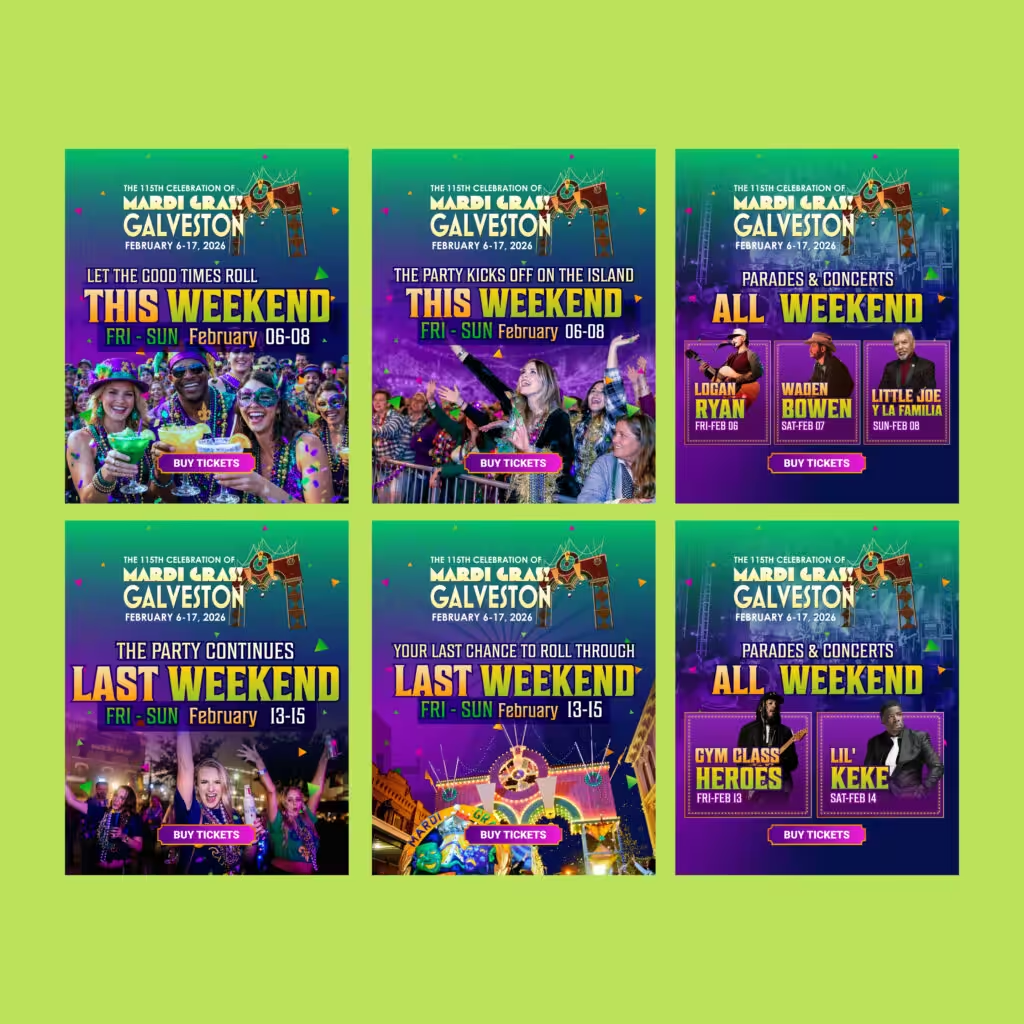
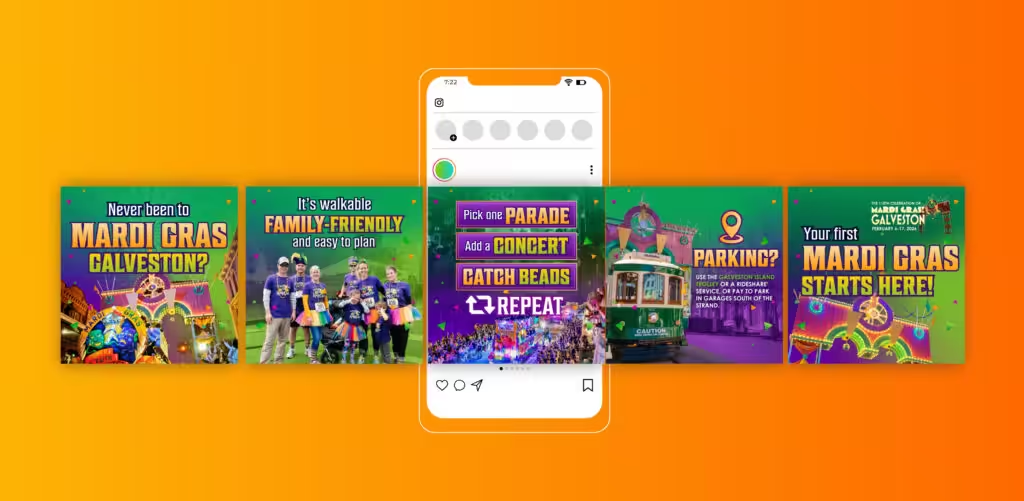
We worked alongside the client every week, which let us pivot fast. When a specific package needed more activity, we expanded messaging toward it: general early sales, balcony tickets, and the 5K run each got their moment as the data called for it.
We paired that agility with 26 distinct creative assets across static and video formats. That volume and variety gave Meta exactly what it needs to find new audiences efficiently and to keep performance steady without burning out a single tired ad.

The results…
A flat budget, held identical to the prior season, produced a step-change in performance once the measurement, targeting, and phasing were rebuilt from the ground up, all on a single Meta channel.
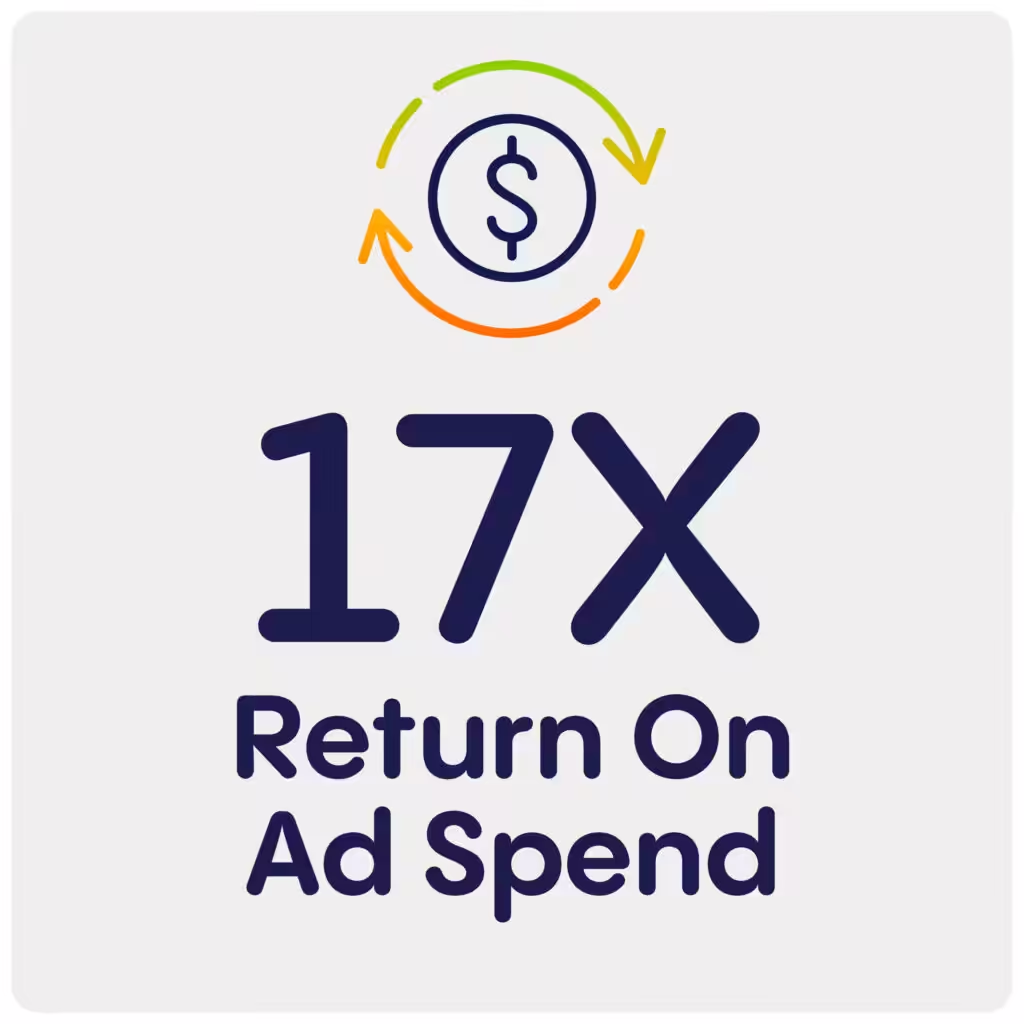
– 16.6x return on ad spend, up from 4.1x the prior season on the exact same budget
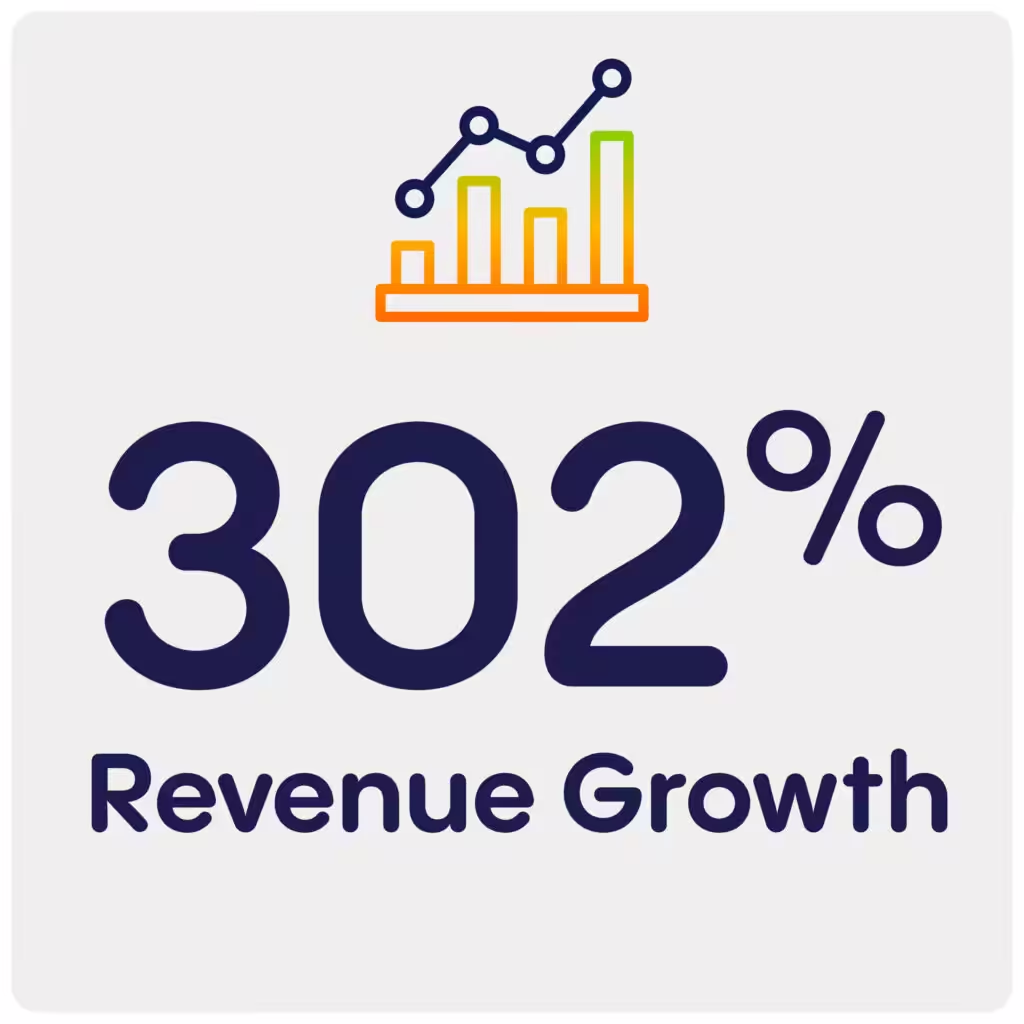
– 302% increase in ticket revenue year over year (Meta-attributed)
– 381% increase in transactions year over year
– 12.9x ROAS on presale and 35.0x ROAS on day-of capture, proving out the phased strategy
– Net-new reach at scale, with roughly 1.9 million impressions and more than 300,000 off-island prospects reached
Beyond the numbers, the season delivered something more durable: a measurement and targeting foundation the client can build on every year. With server-side tracking feeding real purchase data through a single, fully accountable channel, the event is set up to compound its growth season after season.
For more stories of marketing that moves the number that matters, explore our growing library of client success stories.